
What players say
Fresh Fruit Grid Puzzle succeeds by keeping its mechanics pure and letting the challenge emerge naturally. The gradual introduction of complex shapes and tighter time limits keeps each session feeling fresh. I appreciate how the game respects the player's time, offering quick rounds that still feel satisfying. The visual design is pleasant without being distracting, and the lack of intrusive ads is a welcome touch. For anyone looking for a brain-teaser that doesn't demand a huge time commitment, this is a solid choice.
About this game
Core Matching Concept
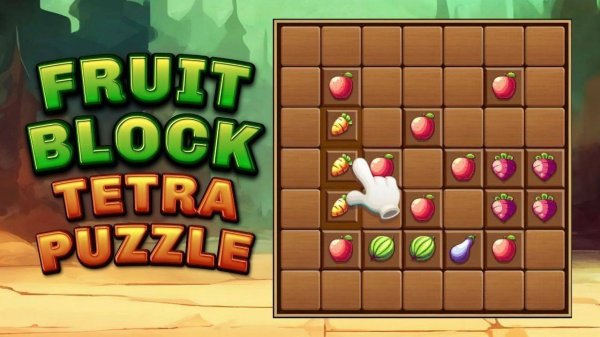
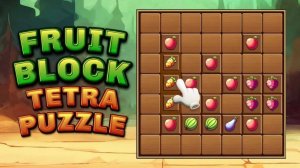
At its heart, this title asks players to fit fruit-shaped tiles onto a grid. The objective is straightforward: arrange pieces so they fill entire rows from left to right or top to bottom. Once a row is complete, it vanishes, and any fruit icons within that row count toward the player's collection target. This loop of placement and clearance forms the central activity, demanding attention to shape and position without overwhelming complexity.
Level Structure and Goals
Each stage presents a specific set of fruit icons that must be gathered before time runs out. The board starts empty, and new tiles appear one at a time for the player to position. As stages progress, the shapes become more irregular and the countdown shorter, requiring faster spatial judgments. The variety in target combinations ensures that no two puzzles feel exactly alike, encouraging repeated attempts to improve efficiency.
Visual Style and Atmosphere
The design uses bright, saturated colors for each fruit tile, making the board easy to scan at a glance. Animations are smooth but unobtrusive, with cleared rows fading away cleanly. The overall aesthetic leans toward cheerful and inviting, avoiding any harsh or distracting elements. This visual clarity supports the core gameplay by letting players focus on pattern recognition rather than deciphering complex graphics.
Accessibility and Learning Curve
New players can grasp the basic rules within minutes because the interface relies on simple drag-and-drop actions. There are no hidden mechanics or steep learning barriers. The early levels serve as a gentle introduction, gradually increasing difficulty so that skills develop naturally. This approach makes the game suitable for family settings where different age groups may play together.
Strategic Depth Within Simplicity
While the premise is easy to understand, achieving high efficiency requires forward thinking. Players must consider not only the current tile but also how it will affect future placements. Leaving gaps can quickly fill the board, so planning several moves ahead becomes essential. The time pressure adds a layer of urgency that transforms the puzzle from a purely casual pastime into a test of quick reasoning.














Player comments
Sign in to comment
You must be logged in before posting a review or rating.
No account? Create one
No comments yet. Be the first to comment!